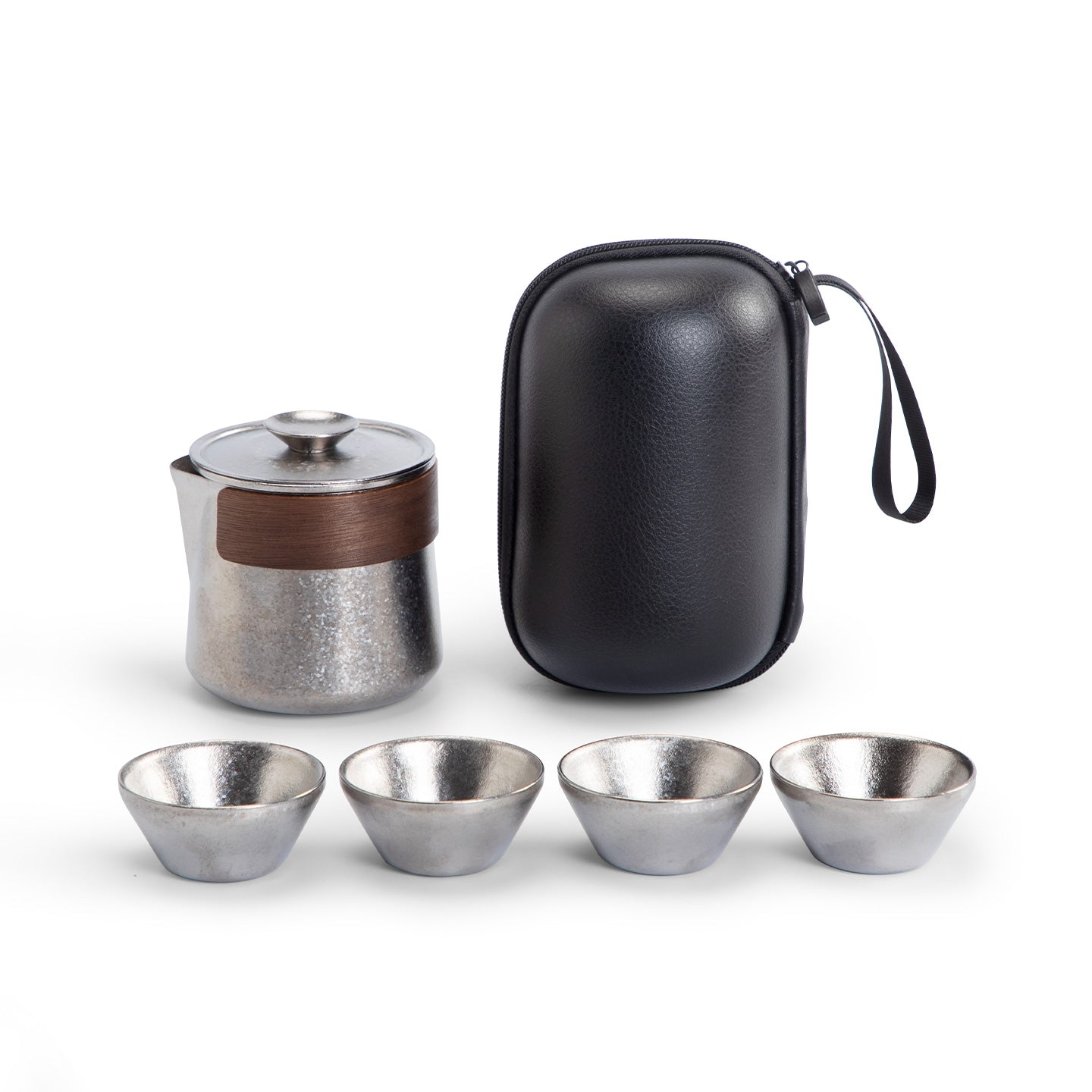

Dunhuang Art Inspired Tea Wares - Every Sip of Tea is a Spiritual Journey
Dunhuang art is one of the most magnificent and well-preserved treasures of Buddhist art in the world. Located at a strategic oasis along the ancient Silk Road in northwestern China, it served as a vibrant cultural melting pot where East met West for over a thousand years.
Flame Dance - Hand Painted Dunhuang latte mug link here
1. The Core: The Mogao Caves
At the heart of Dunhuang art are the Mogao Caves (also known as the Caves of the Thousand Buddhas). Carved into a sandstone cliff, this UNESCO World Heritage site consists of 735 caves constructed between the 4th and 14th centuries.
It is essentially a desert gallery spanning a millennium of human creativity, encompassing:
-
Murals: Over 45,000 square meters of breathtaking wall paintings.
-
Sculputures: More than 2,000 painted clay statues, ranging from miniature figurines to giant sitting Buddha

Flying Apsaras - Mogao Grottoes handmade sake warmer set
2. Key Characteristics & Themes
A Cultural Melting Pot
Because Dunhuang was a major hub on the Silk Road, its art is uniquely cosmopolitan. You can see a beautiful fusion of Chinese artistic traditions blended with influences from India, Persia, Central Asia, and even the Greco-Roman world. For example, early Buddhist statues show Greek-influenced drapery in their robes, while later ones reflect the plump, serene aesthetic of China's Tang Dynasty.
The Buddha - Dunhuang flying apsaras Semi-automatic tea maker link here
The Flying Apsaras (飞天)
If there is one definitive icon of Dunhuang art, it is the Feitian or Flying Apsaras. These are celestial beings or nymphs painted on the cave ceilings and walls. Unlike Western angels, they don’t have wings. Instead, they float gracefully through the air, their movement expressed entirely through swirling ribbons, long scarves, and elegant body poses.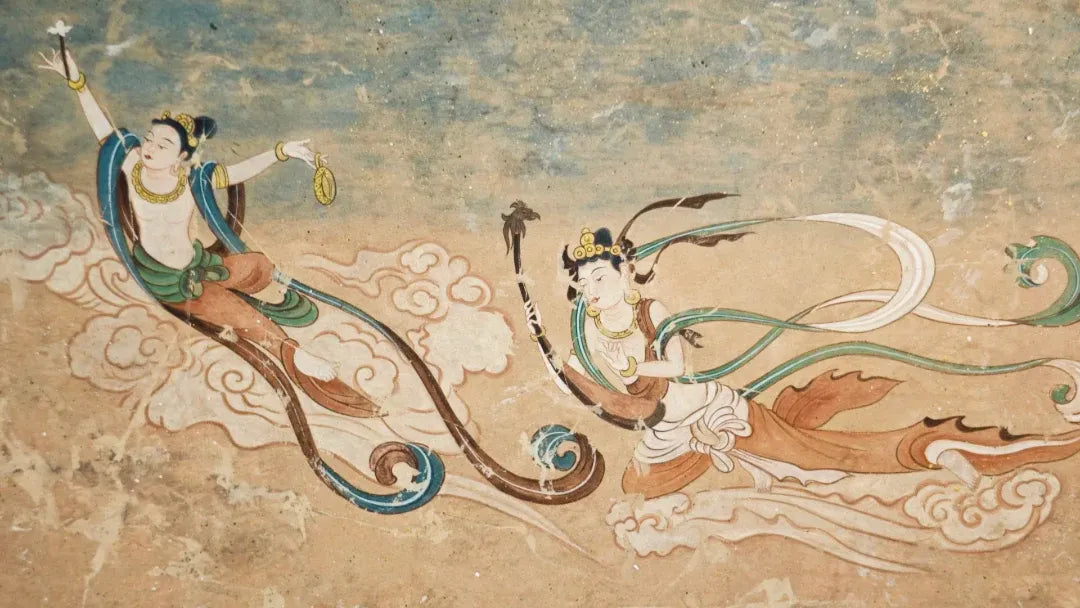
The Flying Apsaras
Windows into Daily Life
While the primary themes are religious (depicting the life of Buddha, sutra stories, and various deities), the murals also serve as an invaluable historical record. Artists painted vivid scenes of secular life from different eras, including weddings, hunting trips, farming, ancient sports, and even foreign merchants traveling with camel caravans.
Flying Apsaras - Mogao Grottoes Vintage teapot with cups set link here
3. Why It Matters Today
Dunhuang art is not just a relic of the past; it is an active encyclopedia of ancient global history. In 1900, the discovery of the "Library Cave" (Cave 17) revealed tens of thousands of manuscripts, textiles, and paintings hidden away for centuries. Written in multiple languages like Chinese, Tibetan, Sanskrit, and Sogdian, these documents gave birth to a global academic field known as Dunhuangology.